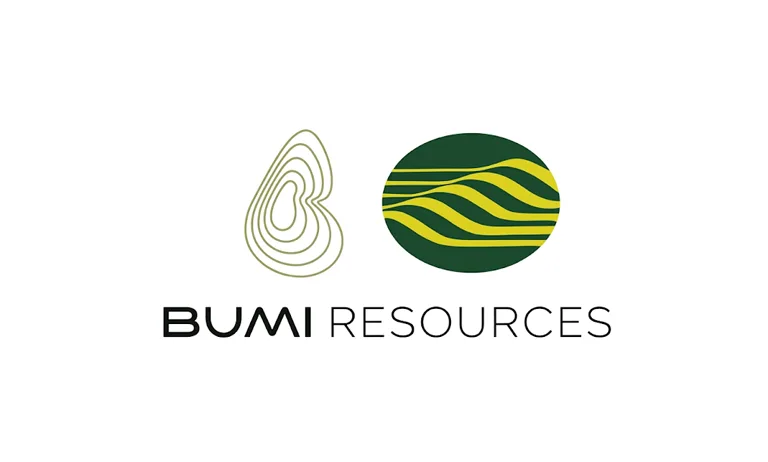
ICN News – A change of corporate logo at a major company is rarely just about design. For PT Bumi Resources Tbk (BUMI), the introduction of a new corporate identity in 2026 is interesting because it can be viewed as a strategic signal: the company is seeking to build a new image amid changes in its business direction and the challenges facing the mining industry.
For years, Bumi Resources has been strongly associated with coal. That identity has been both a strength and a challenge. Coal has been the company’s core business, but at the same time, the industry faces long-term pressure from the energy transition, sustainability demands, commodity-price volatility, and changing global demand for minerals.
Therefore, when BUMI introduced its new logo, the more important question is not “Why did the logo change?”, but rather “What business transformation is the new identity trying to communicate?”
BUMI Wants to Change the Market’s Perception
The new logo can be viewed as part of BUMI’s effort to change the perception that the company is simply a coal producer. The broader direction is to become a more diversified natural-resources company. Diversification into other minerals and commodities is increasingly important because the future of mining is not only about energy, but also about the minerals required for industry, infrastructure, technology and electrification.
In other words, BUMI is trying to tell a new story to the market. The story is no longer simply about how much coal the company can produce, but also about how effectively it can create value from a broader portfolio of mineral resources.
Why Does This Matter to Investors?
This is where the logo change becomes particularly interesting from a capital-market perspective. Rebranding by itself does not automatically increase profits, production or the share price. A logo does not generate cash flow. Ultimately, company value is still determined by fundamentals: production levels, commodity prices, production costs, reserves, debt, cash flow and management’s ability to generate sustainable returns.
However, the new logo can serve as a symbol of a broader strategic transformation. If BUMI’s diversification strategy successfully generates meaningful production and profits from new commodities, the new corporate identity could eventually prove to be more than cosmetic.
On the other hand, if the transformation stops at a visual identity without being followed by stronger fundamentals, the market will ultimately continue to judge BUMI based on its financial performance.
The Biggest Challenge Is Execution
The market rarely awards a higher valuation simply because a company has an attractive story. BUMI must prove that its transformation can create real economic value.
That means investors should pay attention to several key indicators: the contribution of non-coal businesses to revenue and earnings, the development of mineral assets, capital expenditure requirements, debt levels, and the company’s ability to maintain strong cash flow.
If the contribution from new businesses continues to grow and becomes increasingly profitable, BUMI’s positioning as a more diversified natural-resources company will become more credible.
But if coal remains the dominant source of revenue while new businesses require substantial investment and have yet to make a meaningful contribution, then the new logo should be viewed as a promise about the future rather than proof of results already delivered.
The New Logo Is a “Punctuation Mark,” Not the “Answer”
From an investor’s perspective, BUMI’s new logo should not be used as a standalone reason to buy or sell the stock. Instead, the change should be seen as a starting point for asking more important questions:
Is BUMI genuinely transforming its business, or is it simply changing the way the market perceives the company?
The answer will become clearer over the coming years through production figures, revenue, earnings, cash flow, mineral reserves and the contribution of new businesses. If the strategy succeeds, today’s new logo may eventually be remembered as a symbol marking the beginning of a new phase of growth for BUMI. But if execution falls short of expectations, the logo will remain merely a visual change without a corresponding fundamental transformation.
Conclusion
BUMI’s new logo is interesting not because of the design itself, but because it comes at a time when the company is attempting to build a new narrative about its future. BUMI wants to move beyond the perception of being a company identified primarily with coal and establish itself as a broader, more diversified natural-resources company. For investors, this is the most important point.
Do not buy the story simply because the logo is new. Watch whether the story eventually turns into numbers. Ultimately, the market will judge BUMI not by how good its new logo looks, but by how effectively the transformation generates profits, cash flow and long-term value for shareholders, And that is where the real battle begins.
Read more…
For advertising and subscriptions, please contact us via WA Or Email
Need a research report? Please visit CDMI Consulting