ICN News – Coal as the Foundation, Diversification as the Strategy, and Social Contribution as a Legacy
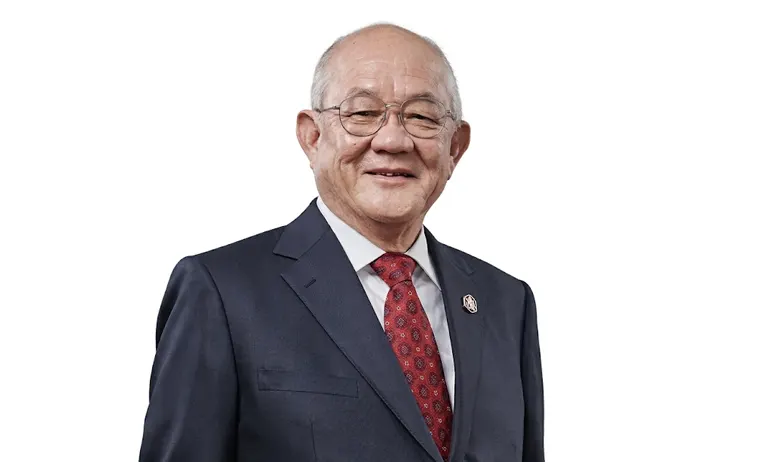
The name Dato’ Dr. Low Tuck Kwong is inseparable from the development of Indonesia’s coal industry. As the founder of Bayan Group and the founder and controlling shareholder of PT Bayan Resources Tbk (BYAN), Low has built his business empire through a long entrepreneurial journey that began not in mining, but in construction.
Today, he stands behind one of Indonesia’s major integrated coal business groups, with activities spanning mining, infrastructure and coal logistics. As of March 31, 2026, Low Tuck Kwong directly held approximately 40.22% of Bayan Resources, making him the company’s largest shareholder and controlling shareholder.
From Construction to Coal Mining
Low Tuck Kwong’s journey in Indonesia began in 1973 when he established PT Jaya Sumpiles Indonesia (JSI). The company was involved in earthworks, civil engineering and marine structures, and later developed a strong reputation as a contractor specializing in complex piling and foundation projects in Indonesia.
His extensive experience in construction provided Low with a valuable understanding of infrastructure development, project management and industrial requirements. A major turning point came in 1997, when Low acquired his first coal mine, PT Gunungbayan Pratamacoal.
This marked the beginning of the expansion of his coal business and ultimately laid the foundation for what would become Bayan Group.
Bayan Resources: Building an Integrated Business
Bayan Resources is not simply a coal mining company, The group has developed an integrated business ecosystem covering mining, transportation infrastructure, coal terminals, loading facilities and coal shipping.
One of its most important operating areas is the Tabang/Pakar region in East Kalimantan. Supporting infrastructure includes coal haul roads and an approximately 101-kilometre overland conveyor system connecting the production area with coal loading facilities.
This strategy reflects Low Tuck Kwong’s approach to building a business that goes beyond controlling coal reserves. The group has also invested heavily in the infrastructure required to move its coal efficiently from mine to customer.
Bayan places innovation and technology at the center of its strategy to maintain its position as one of Indonesia’s low-cost coal producers.
Who Are Part of Low Tuck Kwong’s Business Ecosystem?
Interestingly, Low Tuck Kwong’s business interests extend beyond Bayan Resources, His broader business ecosystem includes interests associated with Samindo Resources, Metis Energy, as well as businesses connected with energy, infrastructure and digital connectivity.
In PT Samindo Resources Tbk, Low Tuck Kwong holds approximately 14.18% of the shares. Samindo operates in integrated coal mining services. Meanwhile, in Singapore, the Low family is also a major investor in SEAX Group, a company developing subsea cable infrastructure for digital connectivity across Southeast Asia.
SEAX is developing connectivity infrastructure linking Singapore, Indonesia and Malaysia, with Low Tuck Kwong serving as an investor, shareholder and chairman within the SEAX ecosystem.
This broader portfolio illustrates how the Low family’s business interests have increasingly expanded from natural resources into energy, infrastructure and digital connectivity.
Diversification: Looking Beyond Coal
One of the most interesting aspects of Low Tuck Kwong’s business strategy is his willingness to diversify beyond coal. He has also been associated with Metis Energy, a Singapore-based renewable energy company. His wider business interests have also extended into healthcare and hospitality through The Farrer Park Company, as well as cable and connectivity-related businesses.
For an entrepreneur whose wealth was built primarily through coal, this diversification represents an effort to develop a business platform beyond coal, It also reflects a broader understanding that long-term business resilience depends not only on commodity resources, but also on infrastructure, energy and other growth sectors.
Low Tuck Kwong and Social Contribution
Beyond business, another important dimension of Low Tuck Kwong’s legacy is his philanthropic work through Bayan Peduli. Established in April 2022, Bayan Peduli serves as a philanthropic initiative founded by Bayan Resources’ founder.
Its programs are built around four major pillars:
Education, Good Health & Well-being, Socioeconomic & Culture, and Environmental Sustainability & Biodiversity. Through Bayan Peduli, social programs are delivered through sponsorships, donations and partnerships with various institutions and organizations.
In education, Bayan Peduli focuses on expanding access to higher education for students from disadvantaged and marginalized backgrounds.
The philosophy is straightforward: education is not merely short-term assistance, but an important instrument for creating social mobility and developing future generations.
BayRun for Charity and Humanitarian Initiatives
One of Bayan Peduli’s notable programs is BayRun for Charity. In 2023, the event attracted 3,688 participants and generated approximately Rp700 million in donations. Low Tuck Kwong subsequently increased the contribution, bringing the total to around Rp1.4 billion. The funds were donated to Yayasan Pita Kuning to support children from underprivileged families affected by cancer.
In 2024, BayRun returned with approximately 6,800 participants and generated around Rp3.2 billion in donations. The funds supported programs including access to clean water in East Nusa Tenggara and Central Sulawesi.
These initiatives demonstrate that Bayan Peduli’s social programs are not limited to short-term charitable assistance. They also address education, healthcare, access to clean water and community empowerment.
Investing in Education
Low Tuck Kwong’s commitment to education predates the establishment of Bayan Peduli. In 2019, he donated US$7 million to the Institut Teknologi Bandung (ITB) Endowment Fund, supporting the development of higher education and human resources in Indonesia.
The contribution reflects his long-standing interest in strengthening Indonesia’s education ecosystem and developing future generations of talent.
Bayan Resources Amid Coal Market Challenges
Behind the business expansion and philanthropic activities, Bayan Resources continues to face one of the coal industry’s fundamental challenges: commodity-price volatility. In 2025, Bayan recorded revenue of approximately US$3.43 billion, relatively lower than in 2024. Net profit attributable to owners of the parent company declined by approximately 16.77% to US$767.92 million.
The decline illustrates that even coal producers with competitive cost structures remain exposed to changes in global coal prices.
Nevertheless, Bayan retains significant growth potential through the continued development of the Tabang/Pakar operations, infrastructure expansion and increased production capacity.
Latest Development: Tabang/Pakar Expansion
One of the developments attracting attention in 2026 is the continued expansion of production capacity in the Tabang/Pakar area. Bayan is targeting production capacity of more than 60 million tonnes per year in 2026, supported by the development of integrated transportation and logistics infrastructure.
This expansion is strategically important because the company’s growth is being supported not only by additional mining capacity, but also by infrastructure designed to move larger volumes efficiently.
Meanwhile, market speculation in August 2026 regarding a potential change in Bayan’s ownership was publicly denied by the company. Reports suggesting the acquisition of approximately 62.2% of Bayan shares by businessman Haji Isam were described as market rumors rather than a completed transaction.
Building More Than a Coal Company
The journey of Low Tuck Kwong reveals a distinctive business pattern, He began his career in Indonesia as a contractor, entered coal mining, transformed Bayan into an integrated coal business, and gradually expanded his interests into renewable energy, mining services, healthcare, hospitality and digital connectivity.
At the same time, he established Bayan Peduli as a platform through which the success of the business could contribute to society. Therefore, Low Tuck Kwong’s legacy cannot be measured solely by coal production volumes or the market value of Bayan Resources.
His broader legacy lies in his ability to build a business ecosystem, develop infrastructure, diversify into new sectors and channel part of his business success into meaningful social initiatives.
For Indonesia’s mining industry, Low Tuck Kwong’s journey offers an important lesson, Mining can provide the foundation for wealth creation, but long-term vision determines how far a business can grow, how resilient it can become, and how much value it can create beyond the commodity itself.
Read more…
For advertising and subscriptions, please contact us via WA Or Email
Need a research report? Please visit CDMI Consulting